

Hey there! As a supplier of heavy machinery welding parts, I've seen firsthand how crucial it is to pick the right welding techniques for these parts. Heavy machinery operates under some seriously tough conditions, so the welding has to be top - notch to ensure the machinery's reliability and longevity. In this blog, I'll share some welding techniques that are well - suited for heavy machinery welding parts.
Shielded Metal Arc Welding (SMAW)
Shielded Metal Arc Welding, or SMAW for short, is a classic in the welding world. It's also known as stick welding. This technique uses a consumable electrode coated in flux. When the electrode is struck against the workpiece, an arc is formed, melting both the electrode and the base metal. The flux on the electrode creates a shielding gas that protects the weld pool from atmospheric contamination.
One of the big advantages of SMAW is its portability. You don't need a whole bunch of fancy equipment. All you need is a welding machine, electrodes, and a ground clamp. This makes it great for on - site repairs of heavy machinery. For example, if a part on a large mining machine breaks down in a remote location, SMAW can be used to quickly fix it.
However, SMAW does have its drawbacks. The welding speed is relatively slow compared to some other techniques. And the quality of the weld can be a bit inconsistent, especially if the welder isn't very experienced. But overall, it's a reliable option for heavy machinery welding parts, especially for smaller - scale repairs and jobs where portability is key. You can find a wide range of heavy machinery parts that can be welded using SMAW, like those in Heavy Mining Machinery Welding Parts.
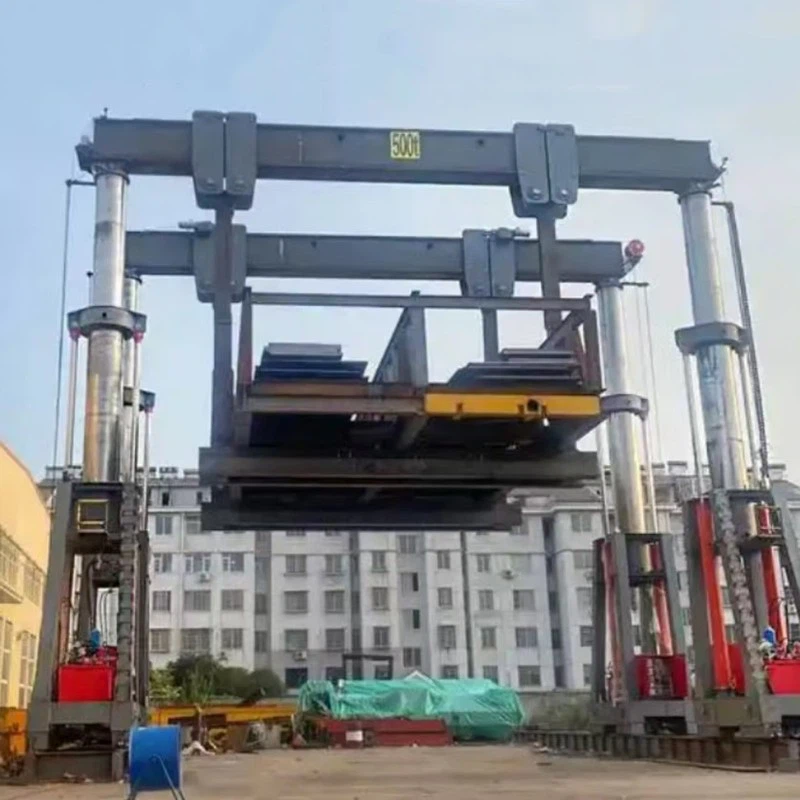
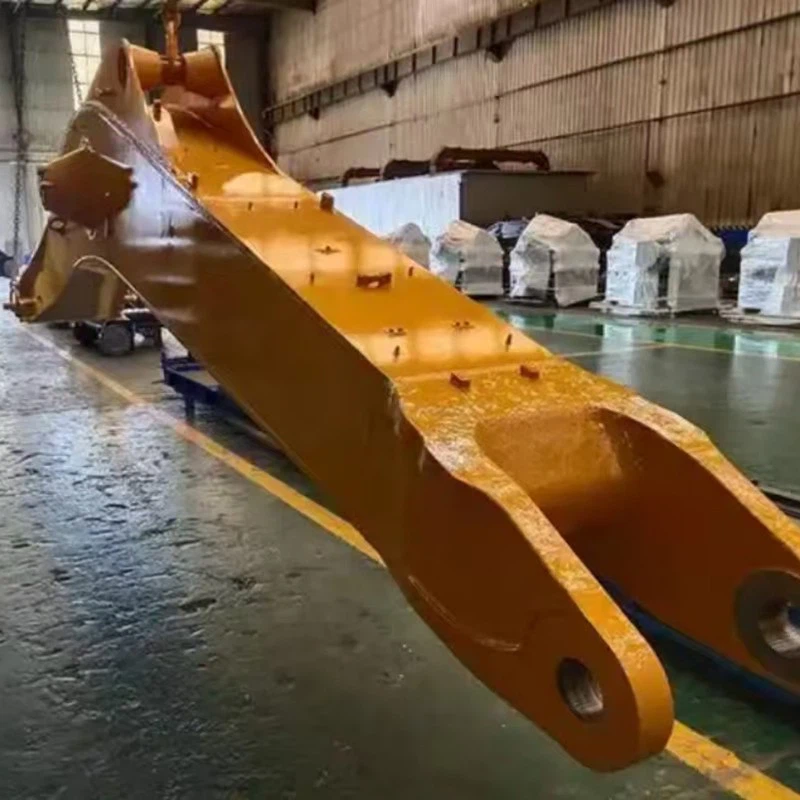
Gas Metal Arc Welding (GMAW)
Gas Metal Arc Welding, or GMAW, is also called MIG (Metal Inert Gas) welding. In this process, a continuous solid wire electrode is fed through a welding gun. A shielding gas, usually a mixture of argon and carbon dioxide, is used to protect the weld pool from oxygen and other contaminants in the air.
GMAW is known for its high welding speed. It can deposit a large amount of filler metal quickly, which is great for welding thick parts of heavy machinery. The welds produced by GMAW are generally smooth and have good appearance. It's also relatively easy to learn, so even less - experienced welders can produce decent - quality welds.
This technique is commonly used in the ship heavy industry. Many parts of ships, such as the hull and structural components, are welded using GMAW. You can check out Ship Heavy Industry Welding Parts to see the types of parts that benefit from this welding method.
But GMAW does require more equipment than SMAW. You need a welding machine, a wire feeder, a shielding gas supply, and a welding gun. And it's not as suitable for outdoor use in windy conditions because the shielding gas can be blown away, leading to poor - quality welds.
Flux - Cored Arc Welding (FCAW)
Flux - Cored Arc Welding, or FCAW, is similar to GMAW in some ways. It uses a tubular wire electrode filled with flux. There are two types of FCAW: self - shielded and gas - shielded. Self - shielded FCAW doesn't require an external shielding gas because the flux in the wire creates its own shielding gas when it's melted. Gas - shielded FCAW uses an external shielding gas in addition to the flux.
FCAW is a great choice for welding thick materials. It can penetrate deeply into the base metal, creating strong welds. The self - shielded version is especially useful for outdoor welding because it's not affected by wind as much as GMAW. This makes it ideal for heavy machinery that is often used outdoors, like construction equipment.
However, FCAW can produce more fumes compared to some other techniques. So, proper ventilation is a must when using this method. It's also a bit more expensive than SMAW due to the cost of the flux - cored wire. But for the strength and performance it offers, it's definitely worth considering for heavy machinery welding parts, especially for parts in Lifting Equipment Welding Parts.
Submerged Arc Welding (SAW)
Submerged Arc Welding, or SAW, is a high - productivity welding technique. In SAW, the arc is completely submerged under a layer of granular flux. The flux not only protects the weld pool from the atmosphere but also provides some alloying elements to the weld.
SAW is known for its high deposition rate and deep penetration. It can weld very thick plates quickly and efficiently. This makes it a popular choice for manufacturing large - scale heavy machinery components, such as the frames of heavy trucks and the structures of large cranes.
The main downside of SAW is that it's not very flexible. It's mostly used for flat or horizontal welding positions. And the equipment is more complex and expensive compared to some other techniques. But if you're looking to mass - produce heavy machinery parts with high - quality welds, SAW is a great option.
Electron Beam Welding (EBW)
Electron Beam Welding, or EBW, is a high - energy welding process. It uses a focused beam of high - velocity electrons to melt the base metal. The welding is done in a vacuum chamber to prevent the electrons from being scattered by air molecules.
EBW can produce very precise and high - quality welds. It has a narrow heat - affected zone, which means that the surrounding material of the weld is less likely to be damaged. This is especially important for heavy machinery parts that require high precision, like gears and shafts.
However, EBW is very expensive. The equipment is costly to purchase and maintain, and the need for a vacuum chamber makes it less practical for on - site repairs. It's mainly used in high - end manufacturing of heavy machinery parts where precision is of the utmost importance.
Laser Beam Welding (LBW)
Laser Beam Welding, or LBW, is another high - energy welding technique. It uses a laser beam to melt the base metal. LBW can be done in air or with a shielding gas.
LBW offers high welding speeds and can produce very narrow and deep welds. It's also very precise, making it suitable for welding small and intricate parts of heavy machinery. For example, it can be used to weld electronic components in heavy machinery control systems.
But like EBW, LBW is expensive. The laser equipment is costly, and it requires skilled operators. So, it's usually used in applications where high precision and quality are required, and cost is not the primary concern.
Choosing the Right Welding Technique
When it comes to choosing the right welding technique for heavy machinery welding parts, there are several factors to consider.
First, the type of material is crucial. Different metals and alloys have different welding requirements. For example, stainless steel requires a different welding technique compared to carbon steel.
The thickness of the material also matters. Thicker materials usually require techniques with higher penetration, like FCAW or SAW. Thinner materials can be welded using techniques like GMAW or LBW.
The location of the welding job is another important factor. If it's an on - site repair, portability becomes a key consideration. SMAW or self - shielded FCAW might be the best options. If it's a large - scale manufacturing process in a factory, techniques like SAW or EBW could be more suitable.
And of course, the quality requirements of the weld play a big role. For parts that are under high stress or require high precision, techniques like EBW or LBW might be necessary. For less - critical parts, SMAW or GMAW could be sufficient.
As a supplier of heavy machinery welding parts, I understand the importance of using the right welding technique. We ensure that all our parts are welded using the most appropriate method to meet the highest quality standards.
If you're in the market for heavy machinery welding parts or have any questions about the welding techniques we use, don't hesitate to reach out. We're here to help you find the best solutions for your heavy machinery needs. Whether you need parts for mining, shipbuilding, or lifting equipment, we've got you covered.
References
- American Welding Society. Welding Handbook.
- AWS D1.1 Structural Welding Code - Steel.
- ASME Boiler and Pressure Vessel Code.


