

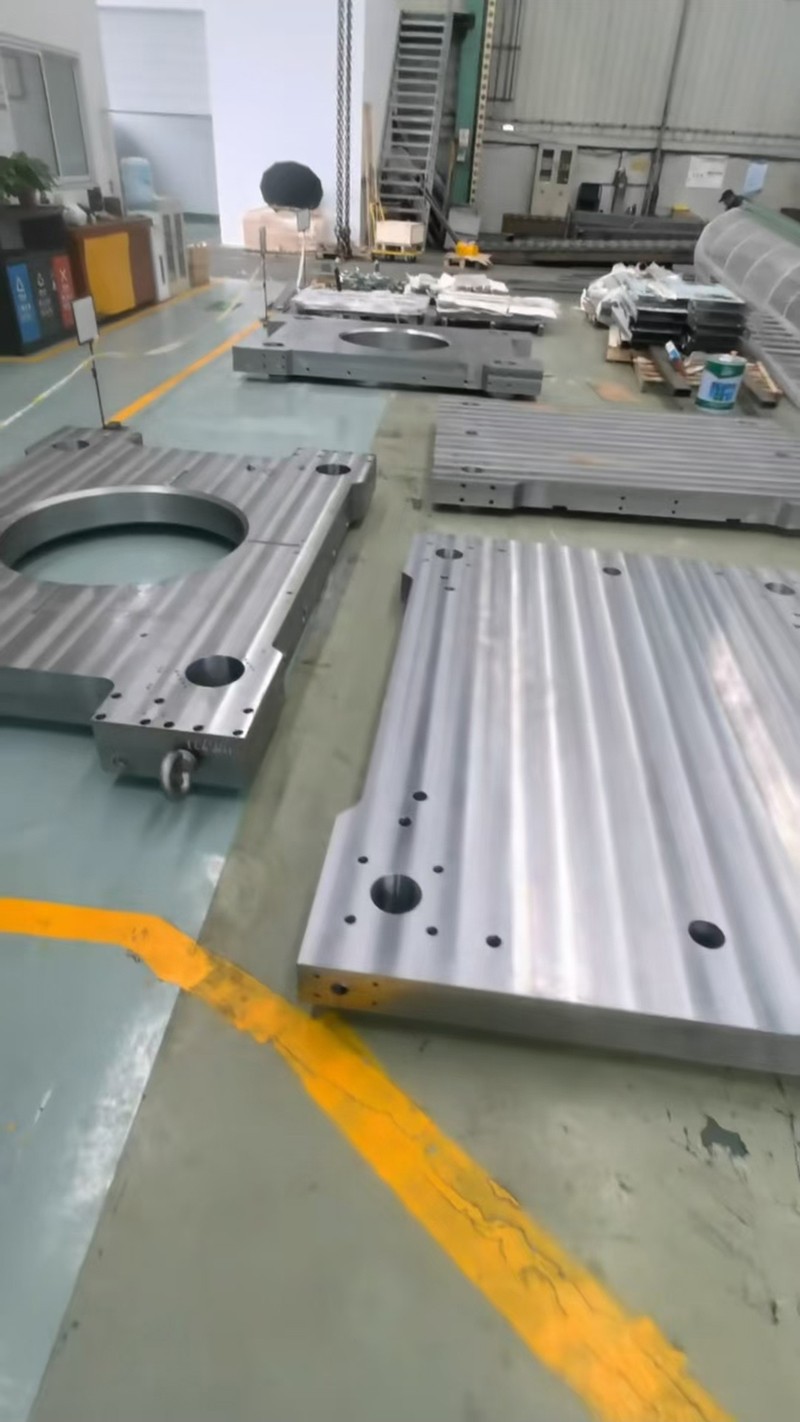
Hey there! As a supplier of Metal Plate Custom Milling, I often get asked if it's possible to mill metal plates with multiple layers or inserts. Well, the short answer is yes, but there's a lot more to it than that. In this blog post, I'll dive deep into the world of multi - layer and insert metal plate milling, sharing what it is, how it works, and its benefits.

What are Metal Plates with Multiple Layers or Inserts?
First off, let's clarify what we mean by metal plates with multiple layers or inserts. A multi - layer metal plate is basically a stack of two or more metal sheets bonded together. These sheets can be of the same or different metals, each chosen for its specific properties like strength, corrosion resistance, or conductivity.
Inserts, on the other hand, are pieces of metal or other materials that are placed within a base metal plate. They're often used to add special features, such as wear resistance in high - stress areas or to provide electrical insulation in certain parts of the plate.
Can You Mill Them?
The big question: can you mill these multi - layer and insert metal plates? Absolutely! But it's not as straightforward as milling a single - layer metal plate. When you're dealing with multiple layers, you have to consider the differences in hardness, density, and cutting properties of each layer. For example, if one layer is a soft aluminum and another is a hard stainless steel, the milling process has to be adjusted accordingly.
When it comes to inserts, the key is to avoid damaging them during the milling operation. You need to use the right cutting tools and techniques to ensure a clean cut around the insert without causing any cracks or chips.
How Does the Milling Process Work?
The milling process for multi - layer and insert metal plates starts with careful planning. You've got to understand the structure of the plate and figure out the best way to approach the milling. This might involve choosing the right cutting speed, feed rate, and depth of cut for each layer or around the inserts.
We use advanced CNC (Computer Numerical Control) milling machines that can be programmed to handle complex geometries and different materials. These machines are incredibly precise, allowing us to make accurate cuts even in the most intricate designs.
Before starting the actual milling, we'll often do a test run on a small sample of the plate. This helps us fine - tune the settings and make sure everything goes smoothly when we move on to the full - scale production.
Benefits of Milling Multi - Layer and Insert Metal Plates
There are several benefits to milling metal plates with multiple layers or inserts.
Enhanced Performance: By combining different metals or adding inserts, you can create a plate that has the best of both worlds. For example, a plate with a hard outer layer for wear resistance and a soft inner layer for shock absorption can perform better in a wide range of applications.
Customization: Multi - layer and insert plates offer a high degree of customization. You can tailor the plate to meet the specific needs of your project, whether it's for the automotive industry, aerospace, or any other field.
Cost - Effectiveness: In some cases, using a multi - layer or insert plate can be more cost - effective than using a single, thick piece of a high - performance metal. You can use less of the expensive material by only incorporating it where it's really needed.
Challenges in Milling Multi - Layer and Insert Metal Plates
Of course, there are also challenges in milling these types of plates. One of the biggest issues is delamination, which is when the layers start to separate during the milling process. This can happen if the cutting forces are too high or if the bond between the layers is weak.
Another challenge is dealing with the heat generated during milling. Different metals have different thermal properties, and excessive heat can cause warping or damage to the plate. To combat this, we use coolant systems to keep the temperature under control.
Our Experience as a Supplier
At our Metal Plate Custom Milling business, we've got years of experience in handling multi - layer and insert metal plates. We've worked on all sorts of projects, from small custom parts to large - scale industrial components.
We're equipped with state - of the - art milling machines and a team of skilled technicians who know how to deal with the unique challenges of multi - layer and insert milling. Whether you need a simple cut or a complex, precision - engineered design, we've got the expertise to get the job done right.
Applications
The applications for milled multi - layer and insert metal plates are wide - ranging. In the automotive industry, they're used for engine components, where different layers can provide the necessary strength, heat resistance, and wear resistance. In the aerospace sector, these plates are used in structural parts and electronic enclosures.
We also do a lot of work for the Big Plate Custom Milling and Special - shaped Metal Parts Milling markets. These often require multi - layer or insert plates to meet the specific requirements of the project.
Why Choose Us?
If you're looking for a reliable supplier for your multi - layer and insert metal plate milling needs, here's why you should choose us. We offer high - quality work at competitive prices. Our commitment to precision and customer satisfaction means that you can trust us to deliver exactly what you need, on time.
We also provide excellent customer service. From the initial consultation to the final delivery, we'll keep you in the loop and make sure you're happy with the process.
Get in Touch
So, if you've got a project that involves multi - layer or insert metal plates and you need them milled, don't hesitate to reach out. We're here to help you turn your ideas into reality. Whether you're a small business or a large corporation, we've got the skills and resources to handle your order. Contact us today to discuss your requirements and get a quote.
References
- Machinery's Handbook: A comprehensive guide to machining processes and materials.
- Journal of Manufacturing Science and Engineering: Contains research on advanced milling techniques for multi - material components.


