

Automation has revolutionized the sheet metal processing industry, offering unprecedented efficiency, precision, and consistency. As a leading Automation Sheet Metal supplier, we are at the forefront of leveraging advanced automation technologies to deliver high - quality sheet metal products. In this blog, we'll explore how automation works in sheet metal processing and the benefits it brings to our customers.
The Basics of Automation in Sheet Metal Processing
Automation in sheet metal processing involves the use of advanced machinery and software systems to perform various tasks with minimal human intervention. These tasks range from cutting and bending to welding and surface finishing. At the heart of automation are programmable logic controllers (PLCs), computer - numerical - control (CNC) machines, and robotic systems.
PLCs are the brains of the automated system. They are programmed to control the operation of different machines based on pre - defined algorithms. For example, in a cutting process, the PLC can determine the exact path and speed of the cutting tool, ensuring accurate and consistent cuts. CNC machines take automation a step further. They are highly precise and can execute complex machining operations based on digital instructions. With CNC machines, we can produce sheet metal parts with tight tolerances that would be difficult to achieve manually.
Robotic systems play a crucial role in automating repetitive tasks. Robots can be equipped with different end - effectors, such as grippers or welding torches, to perform operations like material handling, welding, and assembly. They can work 24/7 without fatigue, increasing productivity and reducing labor costs.
Cutting Process Automation
One of the most critical steps in sheet metal processing is cutting. Automation in cutting has transformed the way we produce sheet metal parts. Laser cutting is a prime example of an automated cutting technology. Laser cutting machines use a high - powered laser beam to cut through the sheet metal with extreme precision. The laser beam can be controlled by a CNC system, which follows a pre - programmed cutting path.
The automation of laser cutting offers several advantages. Firstly, it provides high cutting accuracy. The laser beam can cut intricate shapes with a tolerance of up to ±0.1mm, ensuring that the final product meets the exact specifications. Secondly, laser cutting is a non - contact process, which means there is no physical force applied to the sheet metal during cutting. This reduces the risk of deformation and damage to the material. Thirdly, laser cutting is highly efficient. It can cut through thick sheets of metal quickly, and the cutting speed can be adjusted according to the material and thickness.
Another automated cutting method is waterjet cutting. Waterjet cutting uses a high - pressure stream of water mixed with abrasive particles to cut through the sheet metal. Similar to laser cutting, waterjet cutting is controlled by a CNC system. Waterjet cutting is suitable for cutting a wide range of materials, including metals, plastics, and composites. It is a cold - cutting process, which means there is no heat - affected zone, making it ideal for materials that are sensitive to heat.
Bending and Forming Automation
Bending and forming are essential processes in sheet metal processing to create three - dimensional shapes. Automated bending machines use CNC technology to control the bending angle and force. These machines are equipped with a backgauge system that can accurately position the sheet metal for bending. The backgauge can be adjusted automatically based on the bending requirements, ensuring consistent bending results.
Robotic bending cells are another advancement in the field of bending automation. In a robotic bending cell, a robot is used to load and unload the sheet metal from the bending machine. The robot can also perform secondary operations such as deburring and inspection. This integration of robotics and bending machines increases the overall productivity and reduces the cycle time.
Automated forming processes, such as deep drawing, are also becoming more common. Deep drawing is used to create cup - shaped or box - shaped parts from sheet metal. Automated deep - drawing presses use hydraulic or servo - driven systems to control the drawing force and speed. The use of automation in deep drawing ensures that the parts are formed with consistent wall thickness and shape, reducing the rejection rate.
Welding Automation
Welding is a crucial process for joining sheet metal parts. Automation in welding has improved the quality and efficiency of the welding process. Robotic welding systems are widely used in the sheet metal processing industry. These robots are programmed to perform precise welding operations, such as spot welding or seam welding.
Robotic welding offers several benefits. Firstly, it provides high welding quality. The robot can maintain a consistent welding speed, current, and voltage, resulting in uniform welds with fewer defects. Secondly, robotic welding is highly productive. Robots can work at a faster pace than human welders and can perform continuous welding operations without breaks. Thirdly, robotic welding improves worker safety. Welding is a hazardous process that involves exposure to high temperatures, fumes, and radiation. By using robots, workers can be removed from the dangerous work environment.
Surface Finishing Automation
Surface finishing is an important step in sheet metal processing to enhance the appearance and durability of the products. Automated surface finishing processes include sandblasting, powder coating, and electroplating.
Automated sandblasting machines use a high - pressure stream of abrasive particles to clean and roughen the surface of the sheet metal. The sandblasting process can be controlled by a PLC system to ensure consistent surface finish. Powder coating is another automated surface finishing process. In powder coating, a powder - based paint is applied to the sheet metal using an electrostatic spray gun. The coated sheet metal is then heated in an oven to cure the paint. Automated powder coating systems can ensure uniform coating thickness and high - quality finish.

Benefits of Automation in Sheet Metal Processing
The implementation of automation in sheet metal processing brings numerous benefits to our customers. Firstly, it offers high precision and quality. Automated processes can produce sheet metal parts with tight tolerances and consistent quality, reducing the need for rework and improving the overall product performance.
Secondly, automation increases productivity. Automated machines can work at a faster pace than manual labor and can operate 24/7 without fatigue. This results in shorter production lead times and higher output.
Thirdly, automation reduces labor costs. By replacing manual labor with automated systems, we can save on labor expenses. Additionally, automation reduces the risk of human error, which can lead to costly mistakes in the manufacturing process.
Finally, automation improves worker safety. Many sheet metal processing operations, such as cutting, welding, and surface finishing, are hazardous. By using automated systems, workers can be removed from the dangerous work environment, reducing the risk of accidents and injuries.
Customization and Flexibility
Despite the high level of automation, we understand that our customers often have unique requirements. That's why we offer Customized Sheet Metal Processing. Our automated systems can be easily reprogrammed to accommodate different sheet metal designs and specifications. Whether it's a complex shape, a special alloy, or a specific surface finish, we have the capabilities to meet your customized needs.
Specific Applications of Automation in Different Sheet Metal Processes
In Sheet Metal Stamping, automation has led to significant improvements. Automated stamping presses can perform high - speed stamping operations with consistent force and precision. The use of die change robots in stamping lines allows for quick and efficient changeovers between different stamping operations, reducing downtime and increasing overall productivity.
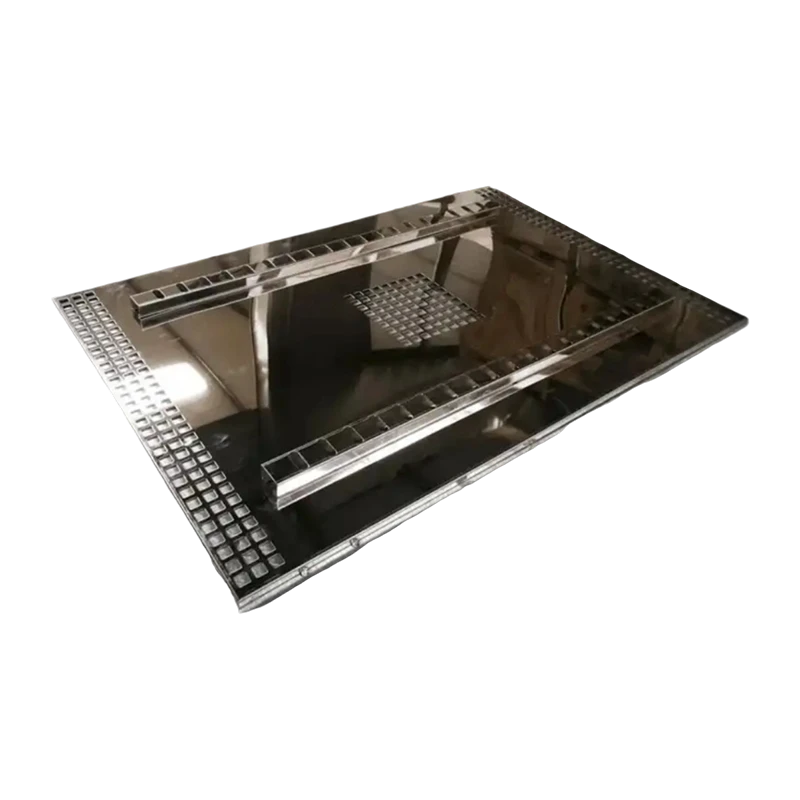
For Mirror Sheet Metal Processing, automation ensures a flawless finish. Automated polishing machines can achieve a high - gloss mirror finish on the sheet metal surface. These machines are programmed to move the polishing tools in a precise pattern, removing any surface imperfections and creating a smooth and reflective surface.
Contact us for Your Sheet Metal Needs
If you're in the market for high - quality, automated sheet metal products, we'd love to hear from you. Whether you need a small batch of customized parts or a large - scale production run, our team of experts is ready to assist you. We can provide you with detailed quotations, technical support, and samples to help you make an informed decision. Reach out to us today to discuss your project requirements and start a successful partnership.
References
- Groover, M. P. (2010). Fundamentals of Modern Manufacturing: Materials, Processes, and Systems. Wiley.
- Schmid, S., & Wegener, K. (2008). Manufacturing Processes for Engineering Materials. Prentice Hall.
- Dornfeld, D. A., Min, S., & Takeuchi, Y. (2006). Atlas of Microfabrication: Micromachining and Nanofabrication Processes and Applications. Society of Manufacturing Engineers.


