

Hey there! As a supplier of heavy machinery welding parts, I've seen firsthand the game - changing impact of friction stir welding (FSW) in our industry. In this blog, I'm gonna dive into the various applications of FSW in heavy machinery parts.
What is Friction Stir Welding?
Before we get into the applications, let's quickly go over what FSW is. Friction stir welding is a solid - state joining process. Unlike traditional welding methods that melt the materials being joined, FSW uses a non - consumable rotating tool to generate frictional heat. This heat softens the materials, and as the tool moves along the joint line, it stirs the softened materials together, creating a solid - state bond. This process has some awesome advantages like lower distortion, better mechanical properties, and reduced defects.
Applications in Heavy Mining Machinery Welding Parts
Mining is a tough industry where heavy machinery has to endure extreme conditions. That's where FSW comes in handy.
Bucket Assemblies
Bucket assemblies on mining excavators are constantly in contact with hard rocks and abrasive materials. Using FSW to join the different parts of the bucket can significantly enhance its durability. The solid - state bond created by FSW is stronger and more resistant to wear and tear compared to traditional welded joints. For instance, the connection between the bucket teeth holders and the main body of the bucket can be made much more reliable with FSW. This reduces the risk of the teeth holders coming loose during operation, which could lead to costly downtime. You can check out more about Heavy Mining Machinery Welding Parts on our website.
Conveyor Components
Conveyor systems are the backbone of any mining operation. They transport large amounts of ore and other materials over long distances. FSW can be used to weld the frames and joints of conveyor belts. The smooth joints created by FSW ensure that the conveyor belts run more smoothly, reducing the risk of jams and breakdowns. Also, the high - strength joints can withstand the heavy loads that conveyor belts carry on a daily basis.
Applications in Lifting Equipment Welding Parts
Lifting equipment is all about safety and reliability. One small failure in a welded joint could lead to a catastrophic accident. FSW offers a solution to improve the quality of these joints.
Crane Booms
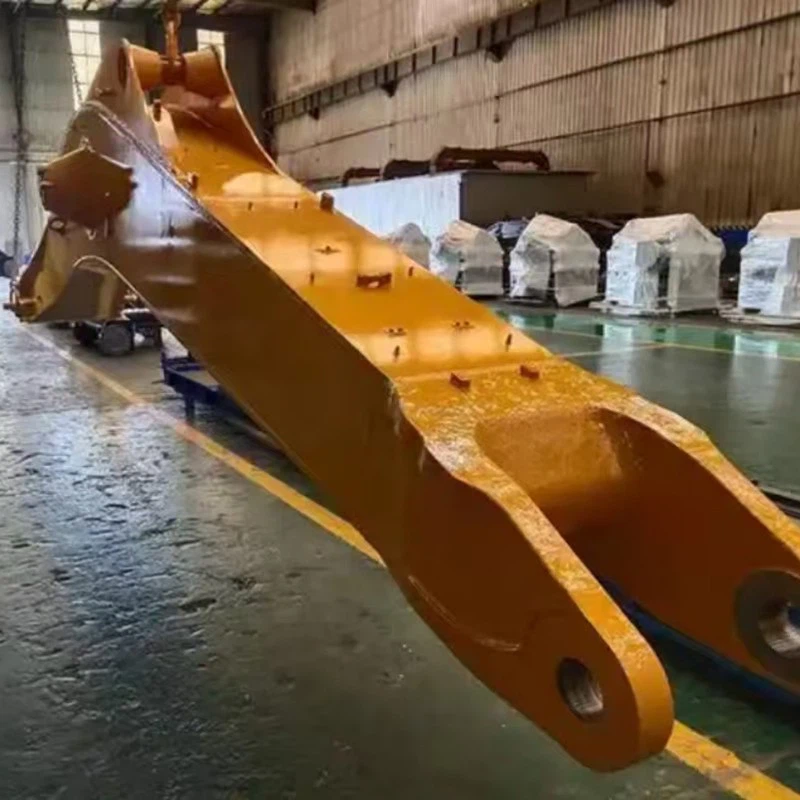
Crane booms are subjected to high stress and bending forces. FSW can be used to weld the sections of the crane boom together. The solid - state nature of FSW results in joints that have excellent fatigue resistance. This means that the crane boom can withstand repeated loading and unloading cycles without the joints cracking or failing. This is crucial for the long - term safety and performance of the crane. If you're interested in Lifting Equipment Welding Parts, we've got you covered.
Forklift Frames
Forklifts are used in warehouses and industrial settings to lift and move heavy pallets. The frames of forklifts need to be strong and stable. FSW can be used to weld the various components of the forklift frame, such as the side members and cross - braces. The high - quality joints ensure that the forklift can handle heavy loads without any structural issues.
Applications in Ship Heavy Industry Welding Parts
The shipbuilding industry demands high - quality welding to ensure the seaworthiness of vessels. FSW has found its way into many shipbuilding applications.
Hull Construction
The hull of a ship is its most critical component. It has to withstand the forces of the ocean, including waves, currents, and corrosion. FSW can be used to weld the large steel plates that make up the hull. The joints created by FSW have better corrosion resistance compared to traditional welded joints. This is because the solid - state process doesn't involve melting, which can sometimes lead to the formation of corrosion - prone areas. Moreover, the low distortion of FSW means that the hull retains its shape and integrity, which is essential for the ship's performance. You can learn more about Ship Heavy Industry Welding Parts on our site.
Bulkhead Welding
Bulkheads are partitions inside a ship that separate different compartments. They play a crucial role in maintaining the ship's stability and safety. FSW can be used to weld the bulkhead panels to the ship's structure. The strong and leak - proof joints created by FSW ensure that the compartments remain isolated, which is important in case of a fire or flooding.
Advantages of Using FSW in Heavy Machinery Parts
Improved Mechanical Properties
As I mentioned earlier, FSW creates joints with better mechanical properties. The solid - state bond has higher strength, better fatigue resistance, and improved ductility compared to traditional welded joints. This means that the heavy machinery parts can last longer and perform better under harsh conditions.
Reduced Distortion
Traditional welding methods often cause significant distortion in the welded parts due to the high heat input. FSW, on the other hand, generates much less heat, resulting in minimal distortion. This is especially important for heavy machinery parts where precise dimensions are crucial for proper functioning.

Environmentally Friendly
FSW is a more environmentally friendly welding process compared to some traditional methods. It doesn't produce harmful fumes or require the use of filler materials in most cases. This reduces the environmental impact of the manufacturing process.
Conclusion
Friction stir welding has revolutionized the way we manufacture heavy machinery parts. Its applications in heavy mining machinery, lifting equipment, and ship heavy industry are just the tip of the iceberg. The advantages it offers in terms of improved mechanical properties, reduced distortion, and environmental friendliness make it a top choice for many heavy machinery manufacturers.
If you're in the market for high - quality heavy machinery welding parts that utilize the latest FSW technology, we'd love to talk to you. Whether you're a mining company, a lifting equipment manufacturer, or a shipbuilder, we can provide you with the parts you need. Just reach out to us for a quote and let's start a great partnership!
References
- "Friction Stir Welding and Processing", by Rajiv S. Mishra and Zhili Chen
- "Advances in Friction Stir Welding and Processing IV", edited by T. DebRoy, H. K. D. H. Bhadeshia, and R. S. Mishra


