

Hey there! I'm a supplier in the sheet metal stamping business. Sheet metal stamping, especially cold stamping, is a widely used process in our industry. But like any technology, it's not without its limitations. Let's dig into what those are.
1. Material Limitations
Cold stamping involves deforming sheet metal at room temperature. This means the process is quite sensitive to the material properties of the sheet metal.
First off, the ductility of the material is a major factor. Ductility refers to a material's ability to be stretched or deformed without breaking. Metals with low ductility, like some high - strength steels or certain alloys, can crack or fracture during cold stamping. For example, if you try to cold stamp a high - carbon steel with a complex shape, you're likely to end up with cracks on the surface of the part. These cracks not only affect the aesthetic appearance of the product but can also compromise its structural integrity.
Another aspect related to material is the work - hardening effect. When you cold stamp a metal, it undergoes plastic deformation. This deformation causes the metal to harden, which is known as work - hardening. As the metal hardens, it becomes more difficult to deform further. So, if you need to perform multiple stamping operations on a single piece of sheet metal, you might run into problems. The work - hardened areas may resist further deformation, leading to uneven shapes or even tool failure. You can learn more about different sheet metal processing technologies at Automation Sheet Metal.
2. Geometric Limitations
The shape and size of the part you want to create also pose significant limitations in cold stamping.
Complex shapes are a real challenge. Cold stamping is great for simple geometries like flat panels or parts with gentle curves. But when it comes to parts with deep draws, sharp corners, or intricate details, things get tricky. For instance, deep - drawn parts require the metal to flow smoothly over a large distance. If the draw ratio (the ratio of the depth of the draw to the diameter of the opening) is too high, the metal may tear or wrinkle. Sharp corners can also cause stress concentrations during stamping, which can lead to cracking.

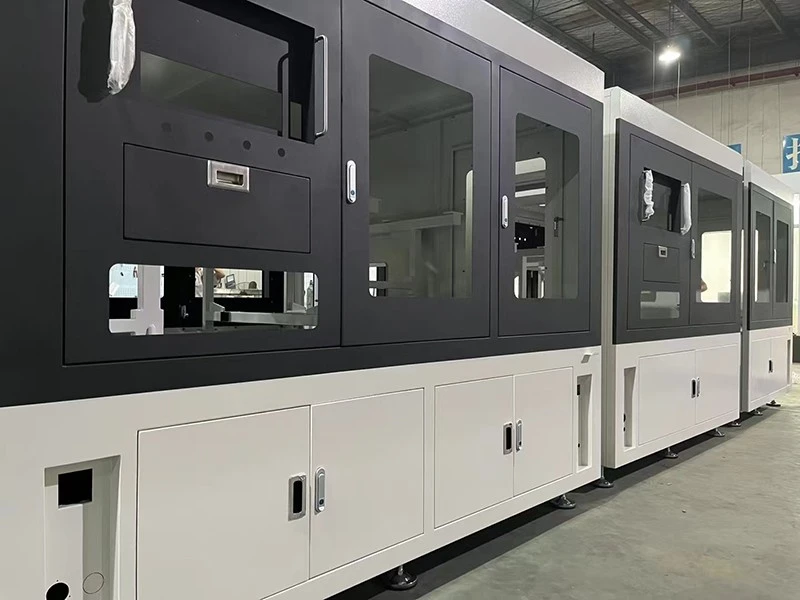
In terms of size, very large or very small parts can be difficult to cold stamp. Large parts need big stamping presses and tools, which can be expensive to build and maintain. And ensuring uniform deformation across the entire surface of a large part is a challenge. On the other hand, small parts with fine features require extremely precise tooling. The slightest misalignment or wear in the tool can cause defects in the part. More insights on sheet metal stamping can be found at Sheet Metal Stamping.
3. Tooling Limitations
Tooling is a crucial part of the cold stamping process, but it also has its own set of limitations.
Tool wear is a common problem. Every time a stamping operation is performed, the tool comes into contact with the sheet metal. This contact causes friction and wear on the tool surface. Over time, the tool will become less sharp, and its dimensions will change. This can result in parts that don't meet the required specifications. For example, if a punch for punching holes in the sheet metal wears down, the holes may become larger or have irregular shapes.
The cost of tooling is another significant limitation. Designing and manufacturing high - quality stamping tools can be very expensive. For custom - made parts, the tooling needs to be designed and fabricated from scratch. This not only involves high upfront costs but also a long lead time. If you need to make changes to the part design later on, you may have to modify or even replace the entire set of tooling, which can be a huge financial burden.
4. Tolerance Limitations
Cold stamping has some challenges when it comes to achieving tight tolerances.
During the stamping process, there are many factors that can affect the dimensional accuracy of the part. The spring - back effect is one of them. Spring - back occurs when the sheet metal tries to return to its original shape after the stamping force is removed. This can cause the part to have slightly different dimensions than the tooling. Predicting and compensating for spring - back is a complex task, and even with advanced simulation software, it's not always possible to achieve extremely tight tolerances.
Surface finish is also related to tolerance. Cold stamping can sometimes leave marks or scratches on the surface of the part. These surface imperfections can affect the fit and function of the part, especially if it needs to be assembled with other components. Although post - processing operations like polishing can improve the surface finish, they add extra cost and time to the production process. For more about customized sheet metal processing, check out Customized Sheet Metal Processing.
5. Production Volume Limitations
Cold stamping is most cost - effective for high - volume production.
The high upfront cost of tooling makes it less suitable for low - volume production. If you only need to produce a small number of parts, the cost of tooling per part will be very high. For example, if a set of tooling costs $10,000 and you only need to make 100 parts, the tooling cost per part is $100. But if you make 10,000 parts, the tooling cost per part drops to just $1.
Also, the setup time for cold stamping is relatively long. Changing the tooling on a stamping press, adjusting the settings for a new part, and performing trial runs all take time. For low - volume production, this setup time can be a significant percentage of the total production time, further increasing the cost.
Conclusion
Cold stamping is a powerful and widely used process in sheet metal processing, but it does have its limitations. From material and geometric constraints to tooling and tolerance issues, these limitations need to be carefully considered when deciding whether cold stamping is the right choice for your project.
If you're in the market for sheet metal stamping services and want to discuss how these limitations might impact your specific needs, don't hesitate to reach out. We're here to help you find the best solutions for your sheet metal processing requirements. Whether it's a high - volume project or a custom - designed part, we can work with you to overcome the challenges posed by cold stamping and make sure you get a high - quality product.
References
- Smith, J. (2018). Sheet Metal Forming Handbook. Publisher XYZ.
- Johnson, A. (2020). Advances in Cold Stamping Technology. Journal of Manufacturing Processes.


