

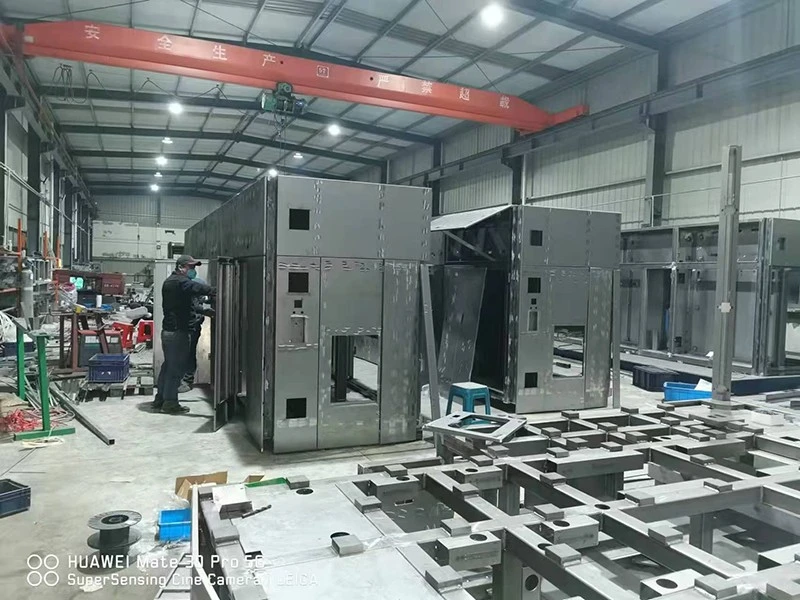
Hey there! As a supplier of Frame Welding Parts, I've had my fair share of experiences in the production process. And let me tell you, quality control is no joke. It's the backbone of our business, ensuring that every part we produce meets the highest standards. So, in this blog, I'm gonna share some of the key quality control points in the production of frame welding parts.

1. Material Inspection
First things first, the quality of the materials we use plays a huge role in the final product. Before we even start welding, we need to make sure that the raw materials are up to par. This means checking for things like the material's composition, thickness, and surface finish.
We source our materials from trusted suppliers, but that doesn't mean we skip the inspection. We use a variety of tools and techniques to verify the material's quality. For example, we might use a spectrometer to analyze the chemical composition of the metal. This helps us ensure that the material has the right amount of elements like carbon, manganese, and silicon, which can affect the strength and weldability of the part.
We also measure the thickness of the material using calipers or micrometers. Any deviation from the specified thickness can lead to issues during the welding process and affect the overall quality of the part. And we visually inspect the surface of the material for any defects like scratches, cracks, or rust. If we find any problems, we either reject the material or take steps to fix it before proceeding.
2. Welding Process Control
Once we've got the right materials, it's time to start welding. But the welding process itself needs to be carefully controlled to ensure quality. There are several factors that we need to pay attention to, including the welding method, welding parameters, and welder qualification.
There are different welding methods available, such as MIG (Metal Inert Gas) welding, TIG (Tungsten Inert Gas) welding, and arc welding. Each method has its own advantages and disadvantages, and we choose the one that's most suitable for the specific part we're producing. For example, MIG welding is fast and efficient, making it a good choice for large-scale production. TIG welding, on the other hand, provides a high-quality weld with excellent control, which is ideal for precision parts.
The welding parameters, such as the welding current, voltage, and travel speed, also need to be carefully set and monitored. These parameters can affect the quality of the weld, including its strength, porosity, and appearance. We use welding equipment that allows us to precisely control these parameters, and we regularly calibrate the equipment to ensure accuracy.
And of course, the welder's skill and qualification are crucial. Our welders are highly trained and certified to perform the welding operations. We provide them with ongoing training to keep their skills up to date and ensure that they follow the proper welding procedures. We also conduct regular inspections of the welds to check for any defects and provide feedback to the welders.
3. Dimensional Accuracy
Another important quality control point is the dimensional accuracy of the frame welding parts. The parts need to meet the specified dimensions and tolerances to fit properly into the final product. We use a variety of measuring tools, such as gauges, coordinate measuring machines (CMMs), and laser scanners, to check the dimensions of the parts.
During the production process, we take multiple measurements at different stages to ensure that the parts are within the acceptable tolerances. If we find any deviations, we make adjustments to the production process or the tooling to correct the problem. We also keep detailed records of the measurements to track the quality of the parts over time and identify any trends or issues.
In addition to the overall dimensions, we also pay attention to the alignment and fit of the individual components. The parts need to be properly aligned and assembled to ensure a strong and stable weld. We use fixtures and jigs to hold the parts in place during the welding process and ensure that they are aligned correctly.
4. Weld Quality Inspection
After the welding is complete, we conduct a thorough inspection of the welds to check for any defects. There are several types of weld defects that we look out for, including porosity, cracks, lack of fusion, and incomplete penetration.
We use both visual inspection and non-destructive testing (NDT) methods to detect these defects. Visual inspection is the most basic and commonly used method. We use magnifying glasses and other tools to examine the surface of the weld for any visible defects. We also check the weld for proper bead shape, size, and uniformity.
For more in-depth inspection, we use NDT methods such as ultrasonic testing (UT), radiographic testing (RT), and magnetic particle testing (MT). These methods allow us to detect internal defects that may not be visible to the naked eye. For example, UT uses high-frequency sound waves to detect flaws in the weld, while RT uses X-rays or gamma rays to create an image of the internal structure of the weld.
If we find any defects during the inspection, we take immediate action to repair or rework the part. Depending on the severity of the defect, we may use methods such as grinding, welding repair, or even scrapping the part if it cannot be salvaged.
5. Surface Finish and Coating
The surface finish and coating of the frame welding parts are also important for their appearance and performance. A smooth and clean surface finish not only looks good but also helps prevent corrosion and improve the part's durability.
We use a variety of surface finishing techniques, such as sandblasting, grinding, and polishing, to achieve the desired surface finish. These techniques help remove any rough edges, burrs, or weld spatter from the surface of the part and create a smooth and uniform finish.
In addition to the surface finish, we also apply coatings to the parts to protect them from corrosion and other environmental factors. There are different types of coatings available, such as paint, powder coating, and galvanizing. We choose the coating that's most suitable for the specific application and requirements of the part.
Before applying the coating, we make sure that the surface of the part is clean and free of any contaminants. We also follow the proper coating application procedures to ensure a uniform and durable coating.
6. Final Inspection and Packaging
Once all the quality control checks are complete, we conduct a final inspection of the frame welding parts to ensure that they meet all the specifications and requirements. This includes a final visual inspection, dimensional check, and functional test if applicable.
If the parts pass the final inspection, we carefully package them to protect them during transportation and storage. We use appropriate packaging materials, such as boxes, crates, or pallets, and ensure that the parts are properly secured and protected from damage.
We also include all the necessary documentation with the parts, such as the inspection reports, material certificates, and warranty information. This helps our customers ensure that they are receiving high-quality parts and provides them with the necessary information for installation and use.
Conclusion
In conclusion, quality control is an essential part of the production of frame welding parts. By paying attention to the key quality control points I've discussed, we can ensure that every part we produce meets the highest standards of quality and performance.
As a supplier of Frame Welding Parts, we're committed to providing our customers with high-quality products that meet their specific needs and requirements. We also offer a wide range of other welding parts, including Automation Equipment Welding Parts and Automobile Machinery Welding Parts.
If you're in the market for high-quality welding parts, I encourage you to get in touch with us. We'd be happy to discuss your requirements and provide you with a quote. Let's work together to ensure the success of your projects!
References
- ASME Boiler and Pressure Vessel Code
- AWS D1.1 Structural Welding Code - Steel
- ISO 9001 Quality Management Systems


