

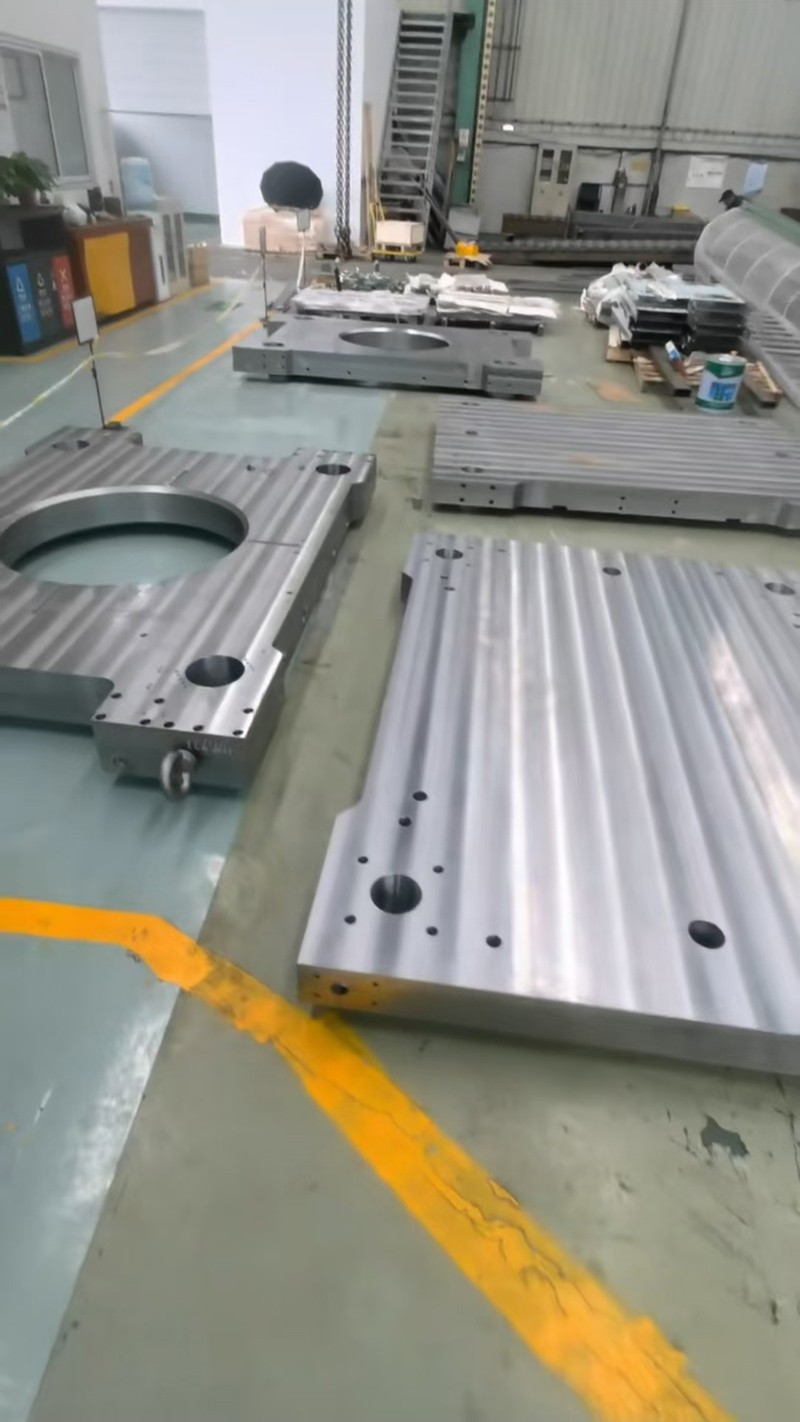
Hey there! As a supplier of Big Plate Custom Milling, I've seen firsthand how the feed rate can make or break a project. In this blog, I'll share my insights on what the impact of feed rate is on Big Plate Custom Milling.
First off, let's talk about what feed rate actually means. In simple terms, the feed rate is how fast the cutting tool moves across the workpiece during the milling process. It's measured in units like inches per minute (IPM) or millimeters per minute (mm/min). This rate is a crucial factor because it directly affects the quality of the milled surface, the tool life, and the overall efficiency of the operation.
Impact on Surface Finish
One of the most noticeable impacts of feed rate on Big Plate Custom Milling is on the surface finish of the plate. When the feed rate is too high, the cutting tool might not have enough time to remove the material cleanly. This can result in a rough surface with visible tool marks, chatter, or even tear - outs. Imagine trying to shave a piece of wood too quickly with a dull blade; you'd end up with a jagged and uneven surface. The same principle applies here.
On the other hand, if the feed rate is too low, the cutting tool will be in contact with the material for an extended period. This can cause over - heating of the tool and the workpiece. Excessive heat can lead to thermal damage to the material, such as hardening or warping, which is definitely not what we want in Big Plate Custom Milling. A proper feed rate will result in a smooth and precise surface finish, which is often a key requirement for many custom projects. For example, if we're milling a big plate for a high - end machinery component, a good surface finish is essential for its proper functioning and aesthetic appeal.
Tool Life
Tool life is another critical aspect affected by the feed rate. When the feed rate is set too high, the cutting tool experiences excessive stress. The forces acting on the tool can cause it to wear out much faster. The edges of the tool may chip or break, and the overall lifespan of the tool will be significantly reduced. This means more frequent tool changes, which not only increases the cost of the project but also leads to downtime as the machine has to be stopped to replace the tool.
Conversely, a very low feed rate can also be detrimental to the tool life. As mentioned earlier, the prolonged contact between the tool and the workpiece can generate a lot of heat. High temperatures can cause the tool material to lose its hardness and strength, leading to premature wear. Finding the right feed rate is like finding the sweet spot for the tool. It allows the tool to cut through the material efficiently without being subjected to excessive stress or heat, thus maximizing its useful life. This is especially important for Big Plate Custom Milling, where large plates require a significant amount of cutting, and tool costs can add up quickly.

Machining Efficiency
Efficiency is a major concern in any manufacturing process, and Big Plate Custom Milling is no exception. A well - optimized feed rate can significantly improve the machining efficiency. If the feed rate is set correctly, the milling process can be completed in a shorter time. This means more plates can be milled in a given period, increasing the overall production output.
However, if the feed rate is too high or too low, the efficiency takes a hit. A high feed rate may lead to more frequent tool changes and rework due to poor surface finish, which slows down the process. A low feed rate, on the other hand, simply takes longer to complete the milling operation. For example, if we're working on a large - scale project with multiple big plates to mill, optimizing the feed rate can save us a substantial amount of time and money.
Factors Affecting the Optimal Feed Rate
Determining the optimal feed rate for Big Plate Custom Milling isn't a one - size - fits - all situation. There are several factors that need to be considered.
The type of material being milled is a major factor. Different metals, such as steel, aluminum, and titanium, have different properties. Harder materials generally require lower feed rates to avoid excessive tool wear and to ensure a good surface finish. Softer materials can often tolerate higher feed rates.
The cutting tool geometry also plays a role. Tools with different shapes and numbers of cutting edges will have different optimal feed rates. For example, a tool with more cutting edges can usually handle a higher feed rate compared to a tool with fewer edges.
The machine's capabilities are another consideration. Some milling machines are more powerful and rigid than others. A more powerful machine can handle higher feed rates without sacrificing accuracy or stability.
Finding the Right Feed Rate
Finding the right feed rate for Big Plate Custom Milling often involves a combination of experience, testing, and following some general guidelines. As a supplier, we've worked on numerous projects, and we've learned a lot about what works and what doesn't.
We usually start by referring to the tool manufacturer's recommendations. They often provide suggested feed rates based on the type of tool and the material to be milled. However, these are just starting points. We then conduct some test cuts on a small piece of the same material as the big plate. By adjusting the feed rate slightly up or down and observing the surface finish, tool wear, and machining time, we can get a better idea of the optimal feed rate for the specific project.
In some cases, we also use advanced software and sensors. These tools can monitor the cutting forces, temperature, and other parameters during the milling process. Based on the data collected, the software can suggest adjustments to the feed rate to optimize the process.
Conclusion
In conclusion, the feed rate has a profound impact on Big Plate Custom Milling. It affects the surface finish, tool life, and machining efficiency. As a supplier, it's our responsibility to ensure that we find the right feed rate for each project. This not only guarantees high - quality custom - milled big plates but also helps our customers save time and money.
If you're in the market for Big Plate Custom Milling, Metal Plate Custom Milling, or Special - shaped Metal Parts Milling, we'd love to have a chat with you. Our team of experts is always ready to discuss your specific requirements and find the best solutions for your projects. Don't hesitate to reach out for a procurement discussion.
References
- Machining Handbook, Various Editions
- Tool Manufacturer's Technical Documentation
- Industry Research Papers on Milling Processes


