

Hey there! I'm a supplier in the Big Plate Custom Milling game. And let me tell you, surface roughness is a big deal in this field. In this blog, I'll break down why it's so important and how it impacts our work.
First off, what exactly is surface roughness? Well, it's basically the measure of the irregularities on the surface of a big plate after the milling process. These irregularities can be tiny bumps, valleys, or scratches. You might think, "Hey, it's just a little roughness. Who cares?" But trust me, it matters a whole lot.
One of the main reasons surface roughness is crucial is in terms of functionality. When we're doing Big Plate Custom Milling, the plates we create are often used in various industrial applications. For example, if a big plate is going to be used in a machine where it needs to slide against another component, a smooth surface with the right level of roughness is essential. Too much roughness can cause excessive friction, which leads to wear and tear on both the plate and the other component. This not only shortens the lifespan of the parts but can also increase the energy consumption of the machine. On the other hand, if the surface is too smooth, there might not be enough grip, which can also lead to problems like slippage.
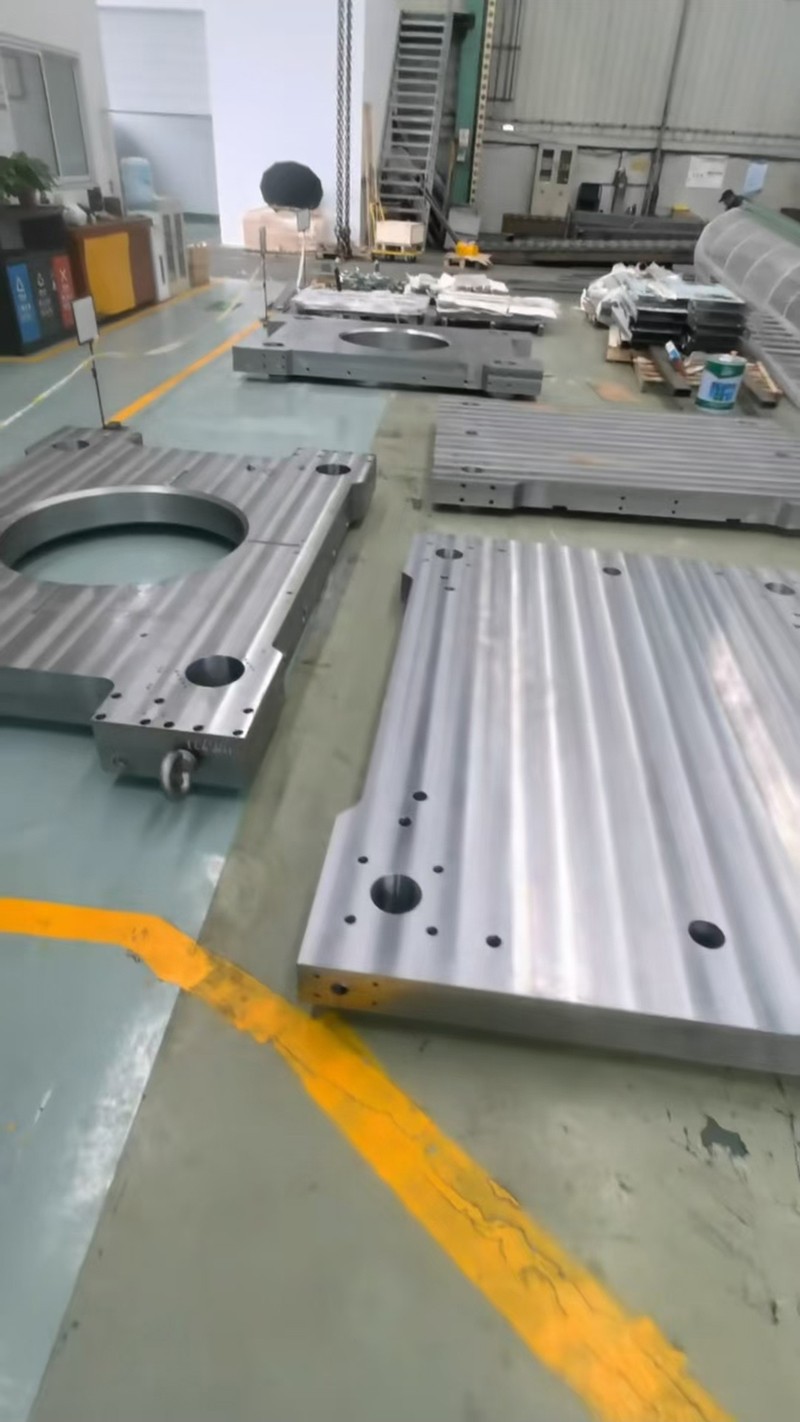

Another important aspect is the impact on corrosion resistance. A rough surface has more exposed area compared to a smooth one. This means that there are more places for corrosive agents, like moisture and chemicals, to attack. In industries where the big plates are exposed to harsh environments, such as the marine or chemical industries, a proper level of surface roughness is needed to ensure good corrosion resistance. We can use special coatings on the plates, but if the surface roughness isn't right, the coating might not adhere properly, leaving the plate vulnerable to corrosion.
Surface roughness also plays a role in the aesthetic appeal of the big plates. In some applications, like architectural or decorative uses, the appearance of the plate matters. A plate with an inconsistent or overly rough surface might not look as good as one with a smooth, uniform finish. This can be a big deal, especially when the plates are visible to the public or are part of a high - end project.
Now, let's talk about how we control surface roughness in Big Plate Custom Milling. There are several factors that come into play. The type of milling tool we use is a major one. Different tools have different cutting edges and geometries, which can affect the surface finish. For example, a tool with a sharp cutting edge can create a smoother surface compared to a dull one.
The cutting parameters also matter a lot. Things like the cutting speed, feed rate, and depth of cut all influence the surface roughness. If we set the cutting speed too high, it can cause vibrations, which in turn can lead to a rougher surface. Similarly, a high feed rate can leave more visible tool marks on the plate.
We also need to consider the material of the big plate itself. Different metals have different properties, and they respond differently to the milling process. For instance, some metals are more ductile and can be milled to a smoother finish more easily, while others are more brittle and might require special techniques to achieve the desired surface roughness.
In addition to Big Plate Custom Milling, our company also offers Metal Plate Custom Milling and Special - shaped Metal Parts Milling. The importance of surface roughness applies to these services as well. Whether it's a standard metal plate or a complex special - shaped part, getting the right surface finish is key to the quality and performance of the product.
For metal plate custom milling, the surface roughness requirements might vary depending on the application. If the plate is going to be used in a precision instrument, a very smooth surface is usually required. We use advanced milling techniques and precision tools to achieve the tight tolerances needed for such applications.
In the case of special - shaped metal parts milling, the challenge is even greater. The irregular shapes can make it more difficult to control the surface roughness uniformly. But with our experienced team and state - of - the - art equipment, we're able to handle these challenges and deliver high - quality parts with the right level of surface finish.
As a supplier, we understand that every customer has different needs when it comes to surface roughness. That's why we work closely with our clients to understand their specific requirements and then use our expertise to achieve the desired results. We offer custom solutions to ensure that the big plates, metal plates, or special - shaped parts we mill meet the highest standards of quality.
If you're in the market for Big Plate Custom Milling, Metal Plate Custom Milling, or Special - shaped Metal Parts Milling, we'd love to hear from you. We're here to provide you with top - notch products and excellent service. Don't hesitate to reach out and start a conversation about your project. Let's work together to get the perfect surface finish for your metal parts.
References:
- "Manufacturing Engineering and Technology" by Serope Kalpakjian and Steven R. Schmid
- "Fundamentals of Machining and Machine Tools" by Peter Oxley


