

In the field of metal processing, custom milling of metal plates is a crucial service, catering to a wide range of industries with diverse requirements. One of the most frequently asked questions by our clients at our Metal Plate Custom Milling service is about the minimum thickness of the metal plate that can be used for custom milling. This blog aims to provide a comprehensive answer to this question, taking into account various factors that influence the minimum thickness.
Factors Affecting the Minimum Thickness
The minimum thickness of a metal plate for custom milling is not a fixed value but is determined by several key factors. These factors interact with each other and need to be carefully considered to ensure the success of the milling process.
Material Properties
Different metals have different physical and mechanical properties, which significantly affect the minimum thickness for milling. For example, soft metals like aluminum are more malleable and can generally be milled at thinner thicknesses compared to harder metals such as stainless steel. Aluminum's lower hardness allows for easier cutting and less stress on the material during the milling process. In contrast, stainless steel has higher strength and hardness, which means that when milling very thin stainless - steel plates, there is a higher risk of deformation, cracking, or tool wear.
Milling Process
The type of milling process employed also plays a vital role in determining the minimum thickness. There are two main types of milling: conventional milling and CNC (Computer Numerical Control) milling.
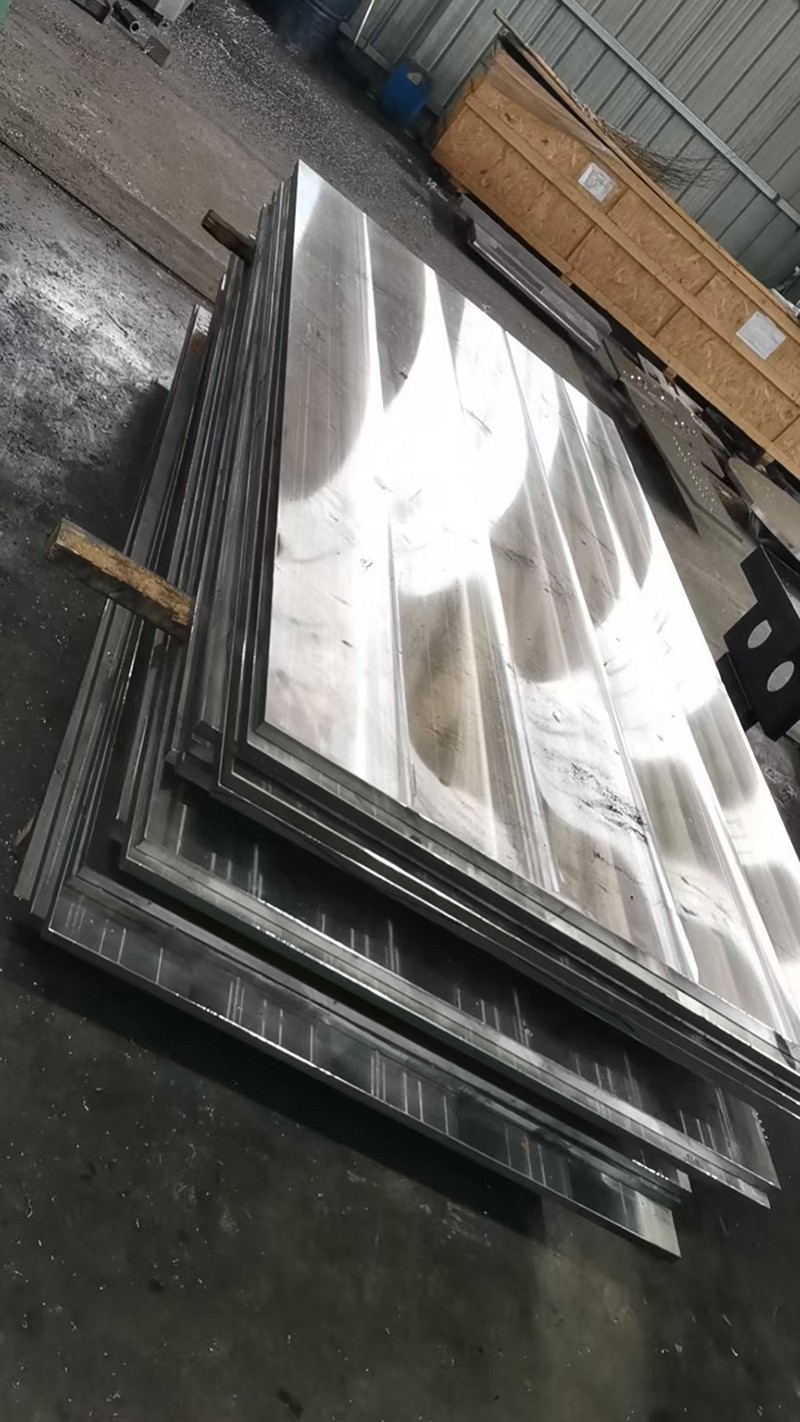

Conventional milling relies on manual operation to a certain extent, and the cutting forces are relatively difficult to control precisely. This often limits the minimum thickness of the metal plate that can be milled. For instance, in a conventional end - milling operation, if the plate is too thin, the cutting forces may cause the plate to vibrate or warp, resulting in poor surface finish and dimensional accuracy.
On the other hand, CNC milling offers greater precision and control. With advanced programming and automated tool movement, CNC milling machines can handle thinner plates more effectively. The cutting parameters can be adjusted precisely according to the material and the design requirements. However, even with CNC milling, there are still limitations. For example, extremely thin plates may be difficult to hold securely in the milling fixture, which can lead to positioning errors during the milling process.
Design Complexity
The complexity of the design to be milled on the metal plate is another important factor. If the design involves intricate details, deep cuts, or sharp corners, a thicker plate may be required. This is because thin plates may not be able to withstand the cutting forces without deforming when complex shapes are being milled. For example, when milling a metal plate with a fine lattice pattern, a relatively thicker plate is needed to ensure that the thin struts in the pattern do not break or distort during the milling process.
General Guidelines for Minimum Thickness
Based on our experience as a Metal Plate Custom Milling supplier, we can provide some general guidelines for the minimum thickness of different metals in common milling applications.
Aluminum
For aluminum, in relatively simple milling operations with basic shapes and low - stress designs, the minimum thickness can be as low as 0.5 mm. However, if the design is more complex or requires high precision, a thickness of 1 - 2 mm is recommended. For example, when milling an aluminum heat sink with a simple fin design, a 0.5 - mm thick plate can be used. But if the heat sink has a more complex internal structure, a 1.5 - mm thick plate would be a better choice.
Stainless Steel
Stainless steel is a more challenging material to mill due to its high hardness. In general, for simple milling tasks, the minimum thickness is around 1 mm. For complex designs or when high precision is required, a thickness of 2 - 3 mm is advisable. For instance, when milling a stainless - steel bracket with a simple L - shape, a 1 - mm thick plate can be considered. But for a stainless - steel component with multiple holes and slots, a 2 - mm thick plate would be more suitable to avoid deformation and ensure accurate dimensions.
Copper
Copper is a relatively soft metal, similar to aluminum in terms of machinability. For simple milling operations, the minimum thickness can be 0.3 mm. However, for more complex designs, a thickness of 0.8 - 1.5 mm is recommended. For example, when milling a copper electrical contact with a simple rectangular shape, a 0.3 - mm thick plate can be used. But for a copper circuit board with fine traces and pads, a 1 - mm thick plate would be more appropriate.
Our Services and Capabilities
As a professional Metal Plate Custom Milling supplier, we have extensive experience and advanced equipment to handle a wide range of metal plate thicknesses. Our state - of - the - art CNC milling machines are capable of high - precision milling, allowing us to work with relatively thin plates while maintaining excellent surface finish and dimensional accuracy.
We offer a variety of custom milling services, including Special - shaped Metal Parts Milling and Big Plate Custom Milling. Whether you need a small, intricate part or a large, flat plate with specific milling requirements, we can provide a tailored solution. Our team of experienced engineers and technicians will work closely with you to understand your design requirements and determine the most suitable metal plate thickness for your project.
Importance of Choosing the Right Thickness
Choosing the right minimum thickness for your metal plate is crucial for several reasons. Firstly, it affects the cost of the project. Using a plate that is thicker than necessary will increase the material cost, while using a plate that is too thin may lead to production failures, rework, and additional costs.
Secondly, the thickness of the plate directly impacts the performance of the final product. For example, in aerospace applications, the weight and strength of the components are critical. Using the appropriate minimum thickness can ensure that the component meets the required strength - to - weight ratio. In electronic devices, the thickness of the metal plates used for shielding or heat dissipation can affect the functionality and reliability of the device.
Contact Us for Your Custom Milling Needs
If you are in need of Metal Plate Custom Milling services, we invite you to contact us. Our team is ready to discuss your project requirements, provide expert advice on the minimum thickness of the metal plate, and offer a competitive quote. We are committed to delivering high - quality custom - milled metal plates that meet your exact specifications.
References
- "Machining of Metals: An Introduction" by John A. Schey
- "CNC Machining Handbook" by Mark C. Jones
- Industry standards and guidelines on metal plate milling from relevant professional organizations.


