

In the realm of industrial machinery, components like Industrial Roller, Industrial Axis, and Industrial Axle play crucial roles. Among them, the torsional stiffness of industrial rollers is a topic that deserves in - depth exploration. As an industrial roller supplier, I have witnessed firsthand the significance of torsional stiffness in various industrial applications.
Understanding Torsional Stiffness
Torsional stiffness refers to a component's ability to resist twisting deformation when subjected to a torsional load. In the context of industrial rollers, it is a measure of how much torque is required to produce a unit of angular displacement. Mathematically, torsional stiffness (K) can be expressed as the ratio of the applied torque (T) to the resulting angular displacement (θ), i.e., K = T/θ.
The torsional stiffness of an industrial roller is determined by several factors. One of the primary factors is the material of the roller. Different materials have different shear moduli (G), which is a measure of a material's resistance to shear deformation. For example, steel has a relatively high shear modulus compared to aluminum. A roller made of steel will generally have a higher torsional stiffness than one made of aluminum, assuming all other factors such as dimensions are the same.
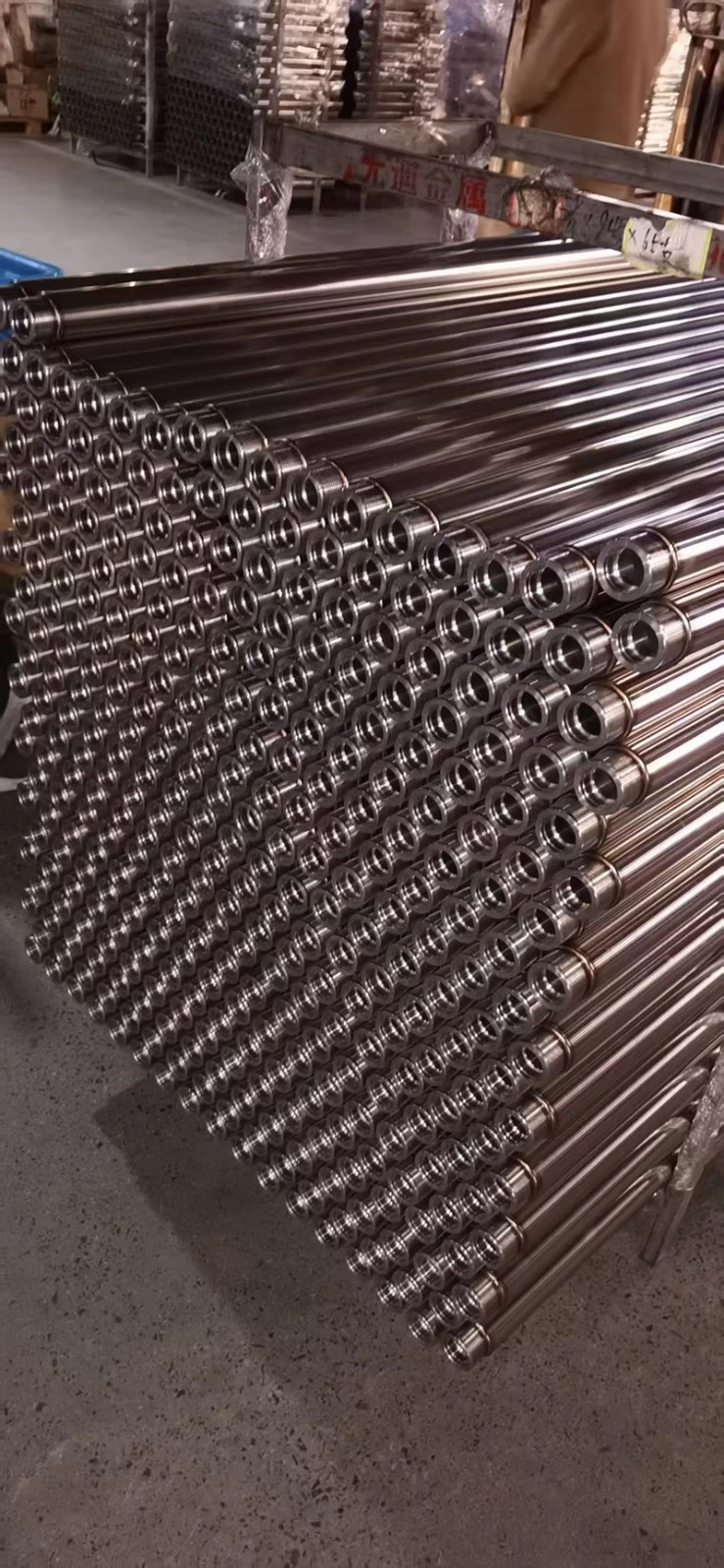

The geometry of the roller also has a significant impact on its torsional stiffness. The polar moment of inertia (J) of the roller's cross - section is a key geometric parameter. For a solid circular cross - section, the polar moment of inertia is given by (J=\frac{\pi d^{4}}{32}), where d is the diameter of the roller. As the diameter of the roller increases, the polar moment of inertia increases significantly, leading to a higher torsional stiffness.
Importance of Torsional Stiffness in Industrial Applications
In many industrial processes, the torsional stiffness of industrial rollers is of utmost importance. In the printing industry, for example, rollers are used to transfer ink from the ink source to the printing surface. A roller with low torsional stiffness may twist under the applied torque, resulting in uneven ink distribution. This can lead to print quality issues such as streaks or inconsistent color density.
In the manufacturing of textiles, rollers are used to guide and tension the fabric during the production process. If the torsional stiffness of the rollers is not sufficient, the fabric may experience uneven tension, causing wrinkles or stretching. This can affect the quality of the final textile product.
In the conveyor belt systems, industrial rollers are used to support and drive the conveyor belts. A roller with high torsional stiffness can ensure smooth and consistent movement of the conveyor belt. If the torsional stiffness is low, the roller may twist, causing the conveyor belt to deviate from its intended path, leading to operational inefficiencies and potential damage to the belt and other components.
Measuring Torsional Stiffness
Measuring the torsional stiffness of industrial rollers is a complex but essential process. One common method is the static torsion test. In this test, a known torque is applied to the roller, and the resulting angular displacement is measured. By dividing the applied torque by the angular displacement, the torsional stiffness can be calculated.
Another method is the dynamic torsion test. In this approach, the roller is subjected to a dynamic torsional load, and the response of the roller is measured using sensors. This method can provide more information about the roller's behavior under real - world operating conditions, such as the natural frequency of the roller and its damping characteristics.
Design Considerations for Optimal Torsional Stiffness
When designing industrial rollers with optimal torsional stiffness, several considerations need to be taken into account. As mentioned earlier, the choice of material is crucial. The supplier needs to select a material that has the appropriate shear modulus for the specific application. For high - torque applications, materials with high shear moduli such as steel or certain alloys may be preferred.
The geometry of the roller should also be carefully designed. Increasing the diameter of the roller can significantly increase its torsional stiffness. However, this may also increase the weight and cost of the roller. Therefore, a balance needs to be struck between the desired torsional stiffness and other factors such as weight and cost.
In some cases, the internal structure of the roller can be optimized to improve its torsional stiffness. For example, using a hollow roller with a carefully designed wall thickness can provide a good balance between torsional stiffness and weight. The hollow structure can reduce the weight of the roller while still maintaining a relatively high polar moment of inertia.
Challenges in Maintaining Torsional Stiffness
Maintaining the torsional stiffness of industrial rollers over their service life can be challenging. One of the main challenges is wear and tear. Over time, the surface of the roller may wear due to friction with other components or the material being processed. This can change the geometry of the roller, which in turn can affect its torsional stiffness.
Corrosion is another factor that can impact the torsional stiffness of industrial rollers. If the roller is exposed to a corrosive environment, the material of the roller may degrade, reducing its shear modulus and thus its torsional stiffness.
Proper maintenance is essential to address these challenges. Regular inspection of the rollers can help detect early signs of wear or corrosion. Lubrication can be used to reduce friction and wear. In corrosive environments, protective coatings can be applied to the rollers to prevent corrosion.
Our Role as an Industrial Roller Supplier
As an industrial roller supplier, we understand the critical importance of torsional stiffness in industrial applications. We offer a wide range of industrial rollers with different materials and geometries to meet the diverse needs of our customers. Our team of engineers is experienced in designing rollers with optimal torsional stiffness. We use advanced manufacturing techniques to ensure the quality and consistency of our rollers.
We also provide comprehensive testing services to verify the torsional stiffness of our rollers. Our state - of - the - art testing facilities allow us to accurately measure the torsional stiffness of the rollers and provide detailed reports to our customers.
Conclusion
The torsional stiffness of industrial rollers is a fundamental property that has a significant impact on the performance and quality of various industrial processes. Understanding the factors that affect torsional stiffness, measuring it accurately, and designing rollers with optimal torsional stiffness are all crucial steps in ensuring the efficient operation of industrial machinery.
If you are in need of high - quality industrial rollers with excellent torsional stiffness, we are here to help. We invite you to contact us for more information and to discuss your specific requirements. Our team is ready to work with you to provide the best solutions for your industrial applications.
References
- Callister, W. D., & Rethwisch, D. G. (2011). Materials Science and Engineering: An Introduction. Wiley.
- Shigley, J. E., Mischke, C. R., & Budynas, R. G. (2004). Mechanical Engineering Design. McGraw - Hill.
- Norton, R. L. (2004). Machine Design: An Integrated Approach. Prentice Hall.


